Your marketing team already uses AI. Nobody built them the system
Three in four B2B marketing teams already use AI, but without infrastructure. Agents aren't solved with another license: they take architecture, data and IT governance.
 Sebastian Mera · Growth Strategist & Automation Specialist
Marketing AI is already in production. It still needs someone to govern it.
Three in four B2B marketing teams already produce content with AI, but most do it with one-off prompts and no infrastructure. The next wave, agents, isn’t solved with another license: it’s solved with architecture, data and governance. And that falls on IT.
Monday, 9:40 a.m. A marketing analyst pastes the full transcript of a customer call into a public chatbot to summarize the buying objections. Customer name, negotiated prices and contract details included.
Nobody told her not to. Nobody gave her an alternative either.
That scene repeats itself in many companies across the region, and not out of negligence. Marketing adopted AI faster than almost any other part of the business. It did so on its own, with consumer tools and without going through IT.
A CXL survey of B2B marketers, published in 2026, puts numbers to the trend. The conclusion is uncomfortable: AI adoption is advancing, but effective adoption isn’t. The teams getting results aren’t the ones using the most tools, but the ones that built systems around them.
If you lead IT, this article shows you why that gap is already your problem and what you can do before the next “we need agents” request lands.
| Figure | What it means |
|---|---|
| 75% | Use AI to produce content (emails, landing pages, ads) |
| 42% | Would like to master building AI agents |
| 65% | Rate themselves as beginners or below in AI systems |
| 43% | Say they don’t have time to learn and experiment |
AI content no longer sets anyone apart
The dominant use case is clear: 75% of respondents use AI to produce content. Emails, landing pages, social copy and ad creative.
On top of that, almost half (49%) already consider themselves advanced at it.
That means something concrete for the business: if your competitors also produce content with AI, writing speed is no longer an advantage. It’s the floor, not the ceiling.
The second most common use, at 42%, is more interesting for IT: research synthesis. Summarizing customer interviews, analyzing sales call recordings, doing competitive analysis.
Here’s the friction point. That work uses the most sensitive data the company has: customer conversations, commercial information, market intelligence. And today, in many organizations, it flows into tools IT neither approved nor monitors.
The question is no longer whether marketing uses AI. It’s with what data, in which tools and under what rules.
The difference is infrastructure, not the prompt
The study’s most useful finding isn’t a number but a pattern. The marketers getting the best results don’t write better prompts. They built four things:
- Persistent brand context. Voice, terminology and positioning documents the model always consults, without anyone pasting them in every time.
- Internal assistants or “skills.” Reusable configurations that encapsulate a process.
- Layered review. Quality checks before publishing.
- Iterative drafting. The model asks questions before writing instead of guessing.
One respondent describes a workflow where the assistant asks about the goal and audience, automatically applies the brand voice guide and delivers a draft that, in their words, is about 90% ready.
Those who stopped at “I paste the brief and get a draft” are still editing by hand.
For an IT leader, this list should sound familiar. It’s architecture: knowledge repositories, versioned configuration, quality controls and repeatable workflows. Exactly what your team knows how to build and marketing, in general, doesn’t.
| Tactical use | Systematic use |
|---|---|
| Everyone with their own account and prompts | Shared, versioned context |
| Inconsistent results across users | Stable, auditable quality |
| Sensitive data in consumer tools | Data in approved environments |
| Knowledge leaves with whoever quits | Knowledge stays in the organization |
Marketing wants agents, and that’s an IT project
When CXL asked which AI skill respondents would like to master overnight, the most common answer wasn’t “better prompts.” It was building agents: 42% of respondents.
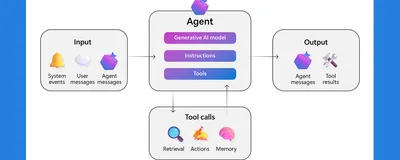
An agent is a system that carries out several steps on its own: it queries data, makes intermediate decisions and produces a result, instead of answering a single instruction.
The other two priorities reinforce the point:
- 24% want reliable data analysis: being able to give AI real numbers without fear of it inventing a key metric.
- 18% want to solve brand voice: making generated output not sound machine-written.
Read those three priorities through IT’s eyes. Agents mean integrations with the CRM, ad platforms and analytics. Reliable data means governed access to sources of truth. Brand voice means context management.
None of the three is solved with one more subscription. All three require permissions, integrations, traceability and someone accountable when something breaks.
If IT doesn’t get involved, marketing will try anyway. With no-code tools, shared credentials and automations nobody documented. You’ve seen that movie before with the last decade’s shadow IT.
The gap that really matters
The study asked respondents to rate their level in five areas. The contrast is stark:
- In content production, 49% consider themselves advanced.
- In AI systems (workflows, agents, automations that compound value), 65% rate themselves as beginners or below.
In other words: the most wanted, highest-leverage skill is precisely the weakest.
CXL frames it as a skills gap that turns into a competitiveness gap, slowly at first and then all at once. For an organization, the risk is twofold. It loses the advantage systems provide, and meanwhile improvised automations pile up that someday will have to be audited, migrated or shut down.
Every AI workflow marketing builds without IT is technical debt you’ll inherit.
The blocker isn’t budget: it’s time
Here’s some good news, and an argument for your next steering committee meeting.
When asked what holds back AI skill development, cost wasn’t the main barrier. Neither was internal resistance or access to tools.
- 43% say they don’t have time to learn and experiment.
- 24% don’t know which skills are worth learning.
- 15% find courses too theoretical or tied to tools that may disappear in six months.
That changes the conversation. It’s not about asking for more budget, but about giving direction. A saturated team doesn’t need another tool catalog; it needs someone to define what to build first, on which platform and under what rules.
That clarity is exactly what a mature IT function can provide.
What IT can do in the next 90 days
- Inventory actual usage. Ask marketing which AI tools they use, with what data and for which tasks. No audit tone: the goal is to understand, not to punish.
- Offer an approved environment. Define one or two corporate platforms with proper data controls. If the safe alternative is more cumbersome than the consumer one, nobody will use it.
- Build the shared context. Together with marketing, turn the brand guide, terminology and positioning into a versioned repository the assistants always consult.
- Pick a pilot workflow. Synthesizing sales calls or interviews is a good candidate: high value, sensitive data and a process that’s manual today. Automate one step, measure the time saved and document what failed.
- Set rules for agents before they arrive. Which systems they can touch, with what permissions, which actions require human approval and who answers for errors.
- Protect one hour a week for experimentation. The time data is clear. If the organization doesn’t reserve that space, learning will keep happening in the shadows and in unapproved tools.
What a skeptical CIO would say
“This is a marketing issue, not mine.” It is, as long as it’s about drafting emails. It stops being one when customer data, CRM integrations or agents that take actions come in. That’s where compliance, security and continuity risks appear, and they always end up with IT, just later and at a higher cost.
“It’s a survey from a school that sells AI courses.” That’s a fair objection. CXL has a commercial interest in the topic and the article doesn’t detail the sample size. Treat the numbers as a directional signal, not statistical truth. Even so, the pattern is easy to check in your own company: ask how many people in marketing use AI and how many of those uses went through IT.
“We don’t have capacity for another project.” You don’t need a transformation program. An approved environment, a context repository and a well-scoped pilot fit in a quarter. The cost of not doing it is to keep piling up ownerless automations.
Systems, not licenses
Marketing has already moved past the question of whether to use AI. It’s stuck on how to do it well, with little time and no clear map.
That’s an unusual opportunity for IT: to show up not as the function that blocks, but as the one that gives structure to something the business has already decided to do. Shared context, governed data, agents with rules. A cleverer prompt doesn’t solve that.
The companies that separate the teams that move ahead from the ones drowning in tools won’t do it by having more licenses, but by having systems.
Marketing AI is already in production. It still needs someone to govern it.
Your first step this week: book 30 minutes with your marketing counterpart and ask a single question: “Which tasks do you do with AI today, and with what data?” With that answer you’ll have your initial inventory and, most likely, your first pilot.
Sources
- Reslan, T. (2026). How teams use AI in B2B marketing in 2026. CXL.