Process Intelligence: the End of Managing by Intuition in Ecuador
Companies in Ecuador manage processes they think they know. Process intelligence shows how they actually operate, and changes how decisions get made.
 Jose Luis Romero · Process Mining Expert

For years, Ecuadorian organizations improved their processes based on manuals, interviews, and experience. Process intelligence replaces that approximate version with the real operation, measured with data from your own systems. And in a dollarized economy, where efficiency is the main lever of competitiveness, that shift stops being optional.
The Diagram Nobody Follows
In almost any certified Ecuadorian company, there’s a flawless process manual. The purchasing flow has five steps, two approvals, and a target time of 72 hours.
Then someone reviews a real purchase order. It had eleven steps, four approvals, two supplier corrections, and took 19 days. Nobody knew, because nobody was measuring it.
That gap between the designed process and the executed process is where margin, cash, and customers get lost. Process intelligence exists to show that gap with data, not opinions. And it’s changing how organizations in the country make operational decisions.
| Figure | What it means |
|---|---|
| 76% | Companies that admit to operating with suboptimal processes (Celonis, 2026) |
| 66% | IT leaders who can’t see how, where, or when technology is actually being used in their organization |
| USD 4 billion | Losses in Ecuador’s productive sector in the first month of the 2024 blackouts, according to the Ecuadorian Business Committee |
What Process Intelligence Actually Is
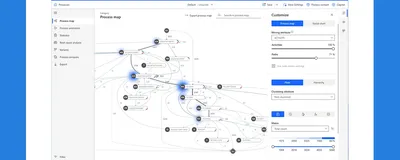
Every transaction in an ERP, a CRM, or a billing system leaves a trail: who did what, when, and in what order. Process mining takes those records and reconstructs the real flow, with all its variants.
Process intelligence goes a step further. Gartner defines it as the union of modeling, design, mining, and monitoring into a single discipline, one that lets you visualize flows, detect inefficiencies, and act on data-driven recommendations.
The market has already made the shift. In 2026, Gartner published its Magic Quadrant under the name Process Intelligence for the first time, after several years of calling it just “Process Mining.” The name change reflects something concrete: the tool stopped being a one-off analysis and became a permanent layer of the operation.
The process manual describes how the company should work. Process intelligence shows how it actually works.
Three Paradigm Shifts
From opinion to data
Discussions about where the bottleneck is stop being a debate between departments.
- Procurement blames finance for the approvals; finance blames procurement for incomplete orders. The real map shows who’s right.
- Process-mapping workshops, which take weeks and depend on people’s memory, get replaced by evidence pulled straight from the systems.
- The business case for changing a process gets built with your own numbers, not someone else’s benchmarks.
From a photo to a movie
An annual diagnosis is outdated the same month it’s delivered.
- Continuous monitoring catches deviations as they happen: a supplier starting to fall behind, a customer whose payment cycle is stretching out, an approval that’s piling up.
- This marks the global trend: even though only 38% of organizations use a digital process twin today, half plan to implement one in the next year.
From a project to daily operations
Process improvement stops being a consulting initiative with a closing date.
- Process indicators become part of weekly management, just like sales or cash.
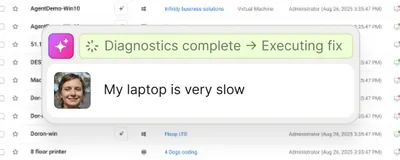
- Alerts and automatic actions close the loop: the system doesn’t just detect the problem, it also escalates or fixes it.
Why Ecuador Needs It More Than Others
There are three reasons specific to Ecuador’s context.
Dollarization removes shortcuts. Without its own exchange-rate policy, companies can’t regain competitiveness through currency. Operational efficiency is one of the few levers left, and every extra day in the collection cycle is working capital tied up in an economy where liquidity is expensive.
Crises demand fast replanning. The 2024 blackouts forced factories and companies to cut shifts or halt operations, with outages of up to 14 hours a day. Sales in the productive sector fell 20% in the first month, partly due to production rescheduling. A company that knows its real flows can decide within hours which processes to prioritize when capacity drops. One that depends on the manual can’t.
ERP investments aren’t paying off as expected. PwC Ecuador warned about this just this month: implementing an ERP doesn’t guarantee value if the technology isn’t connected to processes, data, and people. Its 2026 operations survey, applied to leaders in the United States, found that 89% haven’t fully achieved the expected results from their technology investments. There’s no reason to think the gap is any smaller in Ecuador.
Process intelligence gets installed on top of that already-paid-for ERP and shows why it isn’t delivering what it promised.
AI on Top of Broken Processes Speeds Up the Errors
Ecuadorian companies are evaluating AI agents, copilots, and automation. The temptation is to apply them directly to the current operation.
The result is predictable. 69% of IT leaders say their AI solutions don’t deliver the expected return, often because the underlying processes are too manual or fragmented to scale.
An AI agent that approves invoices on top of a flow with four unnecessary approvals doesn’t improve the process — it executes it badly, faster. That’s why 82% of executives believe AI won’t generate a return if it doesn’t understand how the business actually works.
AI doesn’t replace process knowledge. It needs it as fuel.
Process intelligence delivers exactly that context: which steps add value, which repeat, where the exceptions are. It’s the map an agent needs before it acts.
| Traditional management | Management with process intelligence |
|---|---|
| Processes documented in manuals | Processes reconstructed from the systems |
| Diagnoses through interviews | Diagnoses through transactional evidence |
| Annual or audit-driven review | Continuous monitoring with alerts |
| Automation of the “ideal” process | Automation of the real process |
| Debates between departments | Decisions based on the same data |
How to Start Without a Two-Year Project
- Choose a process with cash impact. Order-to-cash or procure-to-pay tend to be the best candidates: they have clean data in the ERP, and improving them translates directly into liquidity.
- Extract the event logs. The systems already have them. The technical work is in connecting and validating them, not creating them.
- Compare the real process against the designed one. Quantify variants, rework, and times. That first map alone usually justifies the investment.
- Prioritize three measurable improvements. Don’t try to fix everything. Set a target in days, dollars, or percentage of automation.
- Institutionalize the monitoring. Bring process indicators into the management committee. Without that step, the project turns into just another archived report.
Reasonable Objections
“This is for multinationals, not a mid-sized Ecuadorian company.” Size matters less than transaction volume. A distributor with thousands of monthly invoices has enough information to detect valuable patterns. On top of that, there are already local consultancies implementing process intelligence platforms in the country, which cuts costs and timelines compared to bringing in teams from abroad.
“Our data is a mess.” Almost everyone’s is. Process mining runs on the records the system generates automatically, which tend to be more reliable than master data. And finding out where the data quality breaks down is a useful finding in itself.
“Our staff will see this as surveillance.” It’s a real risk, especially if task analysis gets applied to users’ own work. The answer is to focus the analysis on the process, not the people, communicate the purpose from the start, and review data handling against Ecuador’s Organic Law on Personal Data Protection. Managed well, process intelligence usually shows that the problems are in the design, not the people.
The New Competitive Advantage
Ecuadorian organizations have shown enormous resilience: dollarization, fiscal crises, the pandemic, blackouts. But surviving isn’t the same as competing.
The paradigm shift is this: moving from operating with the version of the company that’s in the manuals to operating with the one that exists in the data. Whoever makes that transition first will decide faster, invest better in AI, and weather the next crisis with fewer losses.
You can’t improve what you’re still just imagining.
Sources
- Celonis — The Enterprise AI Reality Check: 2026 Process Optimization Report
- Celonis — 5 takeaways for CIOs from our 2026 Process Optimization Report
- IT Brief — 5 key takeaways for CIOs from Celonis’ 2026 Process Optimisation Report
- Gartner — Innovation Insight: Beyond Process Mining and Analysis — The Future Is Process Intelligence
- Business Wire — Celonis Recognized as a Leader in the 2026 Gartner Magic Quadrant for Process Intelligence
- Celonis — What is process mining?
- El Universo — Crisis energética: sector productivo perdió $4.000 millones en el primer mes de apagones
- Prensa Latina — Sector productivo de Ecuador suma millonarias pérdidas por apagones
- Wikipedia — 2023–present Ecuadorian electricity crisis
- Cámara de Comercio de Quito — PwC Ecuador revela las tendencias que están redefiniendo las operaciones empresariales en 2026
- BMLaurus — Inteligencia de Procesos en Ecuador