
The Reactive AI Mirage: Agentic Architectures for Scaling Complex Operations
Adopting autonomous agents isn't just about buying a license; it requires preparing your data infrastructure, cleaning up your identity policies, and correctly structuring your access controls so AI has safe ground to act on.
 Jose Luis Romero · Process Mining Expert
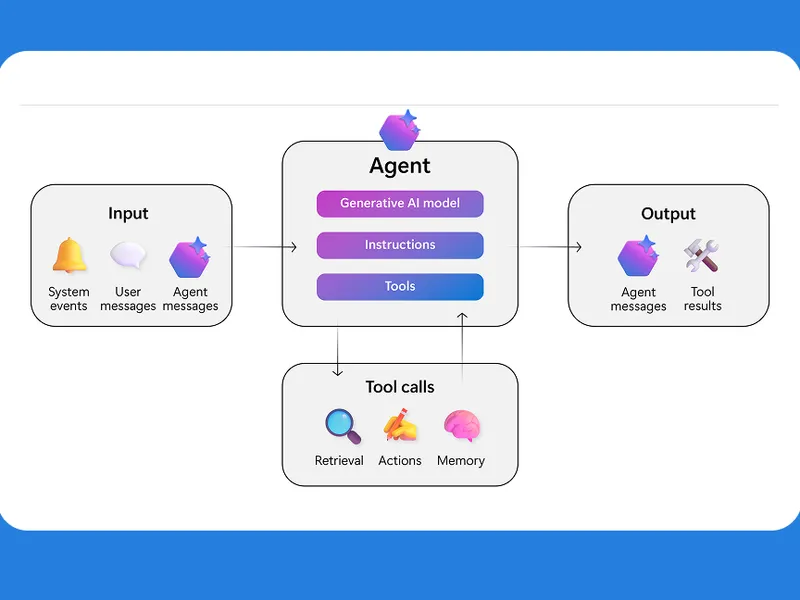
You have Copilot licenses for your whole team, an internal ChatGPT wrapper, and a couple of Zapier flows connected to your CRM. You think you have an artificial intelligence strategy. In reality, you just have an operational patch.
A recent McKinsey report laid it out bluntly: AI is everywhere, but the “agentic organization” still doesn’t exist in most companies. 99% of B2B operations remain stuck in a reactive AI model, where a human has to enter a prompt to get one isolated output. That’s not scalability — it’s simply replacing traditional manual work with manual prompting work.
The real competitive advantage in RevOps and technical operations isn’t using AI as a glorified assistant, but building autonomous agent architectures capable of planning, executing, and correcting complex workflows without human intervention. Here’s why your current infrastructure is failing and how to build a real agentic system.
The “Human-in-the-Loop” Trap
Traditional generative AI solutions fail at the enterprise level because of a fundamental design flaw: they depend on human latency. When you deploy a chatbot or a generative assistant for your sales or marketing team, you run into three critical friction points:
- Context silos. The LLM (Large Language Model) only “knows” what the user provides in the context window. It has no real-time access to your data warehouse tables or the customer’s transaction history.
- Execution fragmentation. The AI generates text or an analysis, but a human still has to copy, paste, send, update the CRM, or fire the webhook. The data flow breaks.
- Lack of iterative reasoning. Reactive models respond to a direct order. They don’t know how to break down a complex goal (e.g., “Qualify this list of 1,000 target accounts and generate personalized campaigns”) into sequential sub-tasks.
As McKinsey notes, the transition to an agentic organization requires abandoning the “isolated use case” mindset in favor of an integrated-systems mindset. If your AI isn’t executing actions in your databases, you’re not doing automation — you’re doing draft generation.
Designing the Agentic System
To move from conversational responses to autonomous workflows, you need to build a three-layer technical infrastructure. It’s not about buying magic software — it’s about orchestrating the right tools.
1. Dynamic Knowledge Layer (RAG Architecture)
An agent without proprietary data is useless in B2B. Instead of relying on an LLM’s general knowledge, you need to implement RAG (Retrieval-Augmented Generation) systems.
- Data ingestion. Connect technical documentation, HubSpot/Salesforce ticket histories, and Gong call transcripts to a vector database (e.g., Pinecone or Weaviate).
- Semantic retrieval. When an agent needs to make a decision, it queries the vector database in milliseconds to inject highly specific context into its reasoning, eliminating hallucinations.
2. Orchestration and Routing Layer
This is where platforms like n8n or code-based architectures like LangGraph shine. You need an orchestrator that manages the logical flow between multiple specialized agents.
Instead of a “Generalist Agent,” you design a multi-agent system. The orchestrator receives the trigger (e.g., a new high-value lead), breaks the objective into tasks, and assigns each task to the corresponding agent.
3. Specialist Agent Layer (Execution)
Each agent has a specific set of tools/functions:
- Researcher agent. Has permissions to run web scraping and search LinkedIn or Clearbit via APIs.
- Analyst agent. Has permissions to read the lead score and cross-reference it against the Ideal Customer Profile (ICP) in your database.
- Executor agent. Has permissions to update fields in Salesforce, draft a hyper-personalized email, and schedule its send in your Sales Engagement platform.
Use Case: The Autonomous RevOps Pipeline
Let’s ground this in a revenue operations scenario where an agentic infrastructure replaces weeks of an SDR’s work.
The problem: 500 leads come in after a B2B event. The sales team takes 2 weeks to research, qualify, and reach out to them. By day 14, buying intent has gone cold.
The agentic system (deployed on n8n + OpenAI/Anthropic APIs):
- Trigger. A webhook captures the event’s lead list.
- Enrichment node. Takes each company’s domain, crawls its corporate website, reads its latest quarterly report or recent funding news, and structures that data into a JSON.
- RAG qualification node. Takes the JSON, queries the vector database against the company’s business rules, and assigns a Tier (A, B, C) based on the detected technical fit.
- Action node. If the lead is Tier A, the agent drafts a technical email specifically referencing the company’s quarterly report. It immediately calls the Power Automate or CRM API to inject the qualified lead directly into the account executive’s active sequence.
The result: 500 leads researched, scored, and segmented in under 10 minutes. Zero human intervention until the customer replies to the email. This is what McKinsey defines as scaling real operational capacity, not just individual productivity.
Infrastructure Is Your Only Advantage
Any competitor can buy a generative AI subscription. Differentiation in today’s B2B market no longer lies in accessing artificial intelligence, but in how you orchestrate that intelligence within your business systems.
The transition to an agentic organization requires rethinking your data architecture, your API interconnections, and your workflow logic. If you’re still relying on manual prompts for repetitive processes, you’re missing out on the real ROI of the AI revolution.
Ready to audit your operational bottlenecks? At Cloud360, we don’t do “trend” consulting. We design and implement agentic architectures, connecting enterprise LLMs, advanced automation (n8n, Power Automate), and RAG systems to your current infrastructure.
Request a technical audit or schedule an architecture workshop with our engineers to map your first autonomous system and transform your operational efficiency.